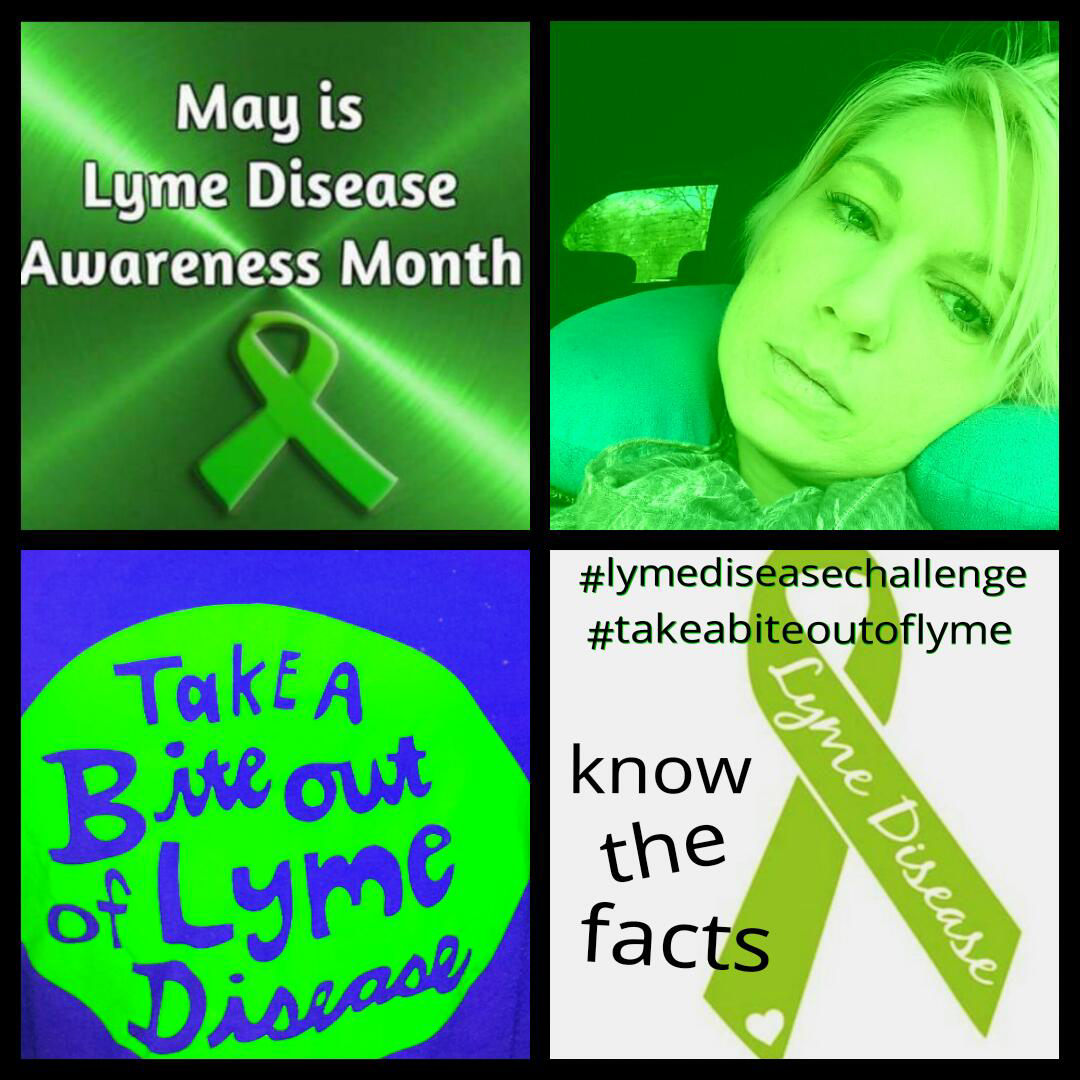
Lyme disease awareness
This year is proving to be a tough one. Treatment is working, but energy levels (& computer tolerance levels... eyes, concentration, headaches) are low.
The
A few awareness points for 2018...
How many times does anyone really want to hear...
- get treatment fast
- wear insect repellent
- "TICK CHECK!!"
❓❔❓❔❓❔❓❔❓❔❓❔
Definitely enough times for it to reeeeallllly sink in - because, let's get personal today - PICC lines are not fun. Neither is Lyme. So let's just reiterate:
-You don't want systemic Lyme disease. Full stop. Just no. You don't even have to consider the PICC line: obviously you don't want a debilitating, poorly understood, difficult to diagnose, impossible to cure (for sure) illness. OBVIOUSLY that goes without saying.
BUT STILL...
-You don't want a PICC line (personally I've not had any other kind, but really, you don't want *any* kind of line)
So, again:
INSECT REPELLENT!
IMMEDIATE TREATMENT!
REMEMBER!
It's not just a case of suffering through a simple (or guess who got lucky.... complex) PICC insertion (see post from last June) & then zapping some meds into your line every day... there's:
1&2. The inevitable irritable skin from constant dressing changes, skin cleaning/ disinfecting/ sticky sticky itchy dressings... and a tube coming out your arm... vein.
3. The body trying to heal around a hole it doesn't want to have there - because that's it's job, right?! I didn't zoom in too much here (on purpose, you're welcome); but you can see the slight crusting around the edge of the line - it has to be scrubbed away at each dressing change too. And THAT'S fun. 😒
4. Just a reminder from my 'PICC placement pic' - it is not a case of 'hello vein, meet line (tubing?)...... hello heart, meet line' 😊. Sure, most PICC placements are nothing to freak out about... (Hundreds of people have told me. Honest.)... they still involve some 'numbing' shots, some maneuvering through veins, into bigger veins and making sure the line rests exactly close enough to your heart for the meds to get in the right place, and exactly far away enough for it not to 'tickle' your heart. (I'm lucky I didn't experience this, but I'm going to bet 'tickle' is one hell of a euphemism!)
Then it has to stay there, thankfully with a little wiggle room, as - again - the body should reject foreign objects, so it can push it out entirely, or - in my case, thankfully - just a little wiggle over time (carefully marked by dots, wiggle is also a euphemism; my line: 39cm with 2cm leeway - this IS an exact science).
And really - does that look like a happy arm? It was not!
Then comes expecting the unexpected - because it always seems to happen, randomly!
1. Creativity required at times. One day I had to take a full bag home for the next day (not frozen, or unmixed):
"Keep. It. Upright."
Umm.... ok.
Let me remind you:
Left arm has the PICC in it... please remember that's my good arm! No holding that bag up with either arm. Hello car-mirror-IV-hook.
And perfectly chosen socks for that day.
Actually - it's AMAZING how many things can be fashioned into some kind of IV poles... lamps, curtain rails, coathangers, scarves, brooms...
2. While the body may try to push out PICC lines, scab over them, react angrily to being scrubbed and covered all the time, sometimes it just says, NOPE. NO MORE.
This day, my poor, poor body did not want to give up any blood (did I mention the regular blood draining to check the medications aren't destroying other organs? Another reason you really don't want systemic Lyme /a PICC line/ these awesome meds). Occasionally my line & body work together and give my doctor or nurse 'decent' blood, suitable for testing, out the line, o needles required. Wonderful days!* There were other days where the blood looked perfectly fine to me - apparently not. Those are needle days.
Then there was this day. On this day, my veins were giving out nothing. The needles were in (SEEEEEE the holes?); but there was no blood. My nurse and I literally stared at the little butterfly needle, clearly in my swollen vein and not a drop of blood came out. Twice. Until, of course, she (kindly) gave up for the day. Then there was blood, and bruises, and ice from the coffee shop...
An unhappy body is another reason not to want a line - your body definitely doesn't want one either!
So... seriously:

How many times does anyone really want to hear...
- get treatment fast
- wear insect repellent
- "TICK CHECK!!"
❓❔❓❔❓❔❓❔❓❔❓❔
Definitely enough times for it to reeeeallllly sink in - because, let's get personal today - PICC lines are not fun. Neither is Lyme. So let's just reiterate:
-You don't want systemic Lyme disease. Full stop. Just no. You don't even have to consider the PICC line: obviously you don't want a debilitating, poorly understood, difficult to diagnose, impossible to cure (for sure) illness. OBVIOUSLY that goes without saying.
BUT STILL...
-You don't want a PICC line (personally I've not had any other kind, but really, you don't want *any* kind of line)
So, again:
INSECT REPELLENT!
IMMEDIATE TREATMENT!
REMEMBER!
It's not just a case of suffering through a simple (or guess who got lucky.... complex) PICC insertion (see post from last June) & then zapping some meds into your line every day... there's:
 |
| PICC problems |
1&2. The inevitable irritable skin from constant dressing changes, skin cleaning/ disinfecting/ sticky sticky itchy dressings... and a tube coming out your arm... vein.
3. The body trying to heal around a hole it doesn't want to have there - because that's it's job, right?! I didn't zoom in too much here (on purpose, you're welcome); but you can see the slight crusting around the edge of the line - it has to be scrubbed away at each dressing change too. And THAT'S fun. 😒
4. Just a reminder from my 'PICC placement pic' - it is not a case of 'hello vein, meet line (tubing?)...... hello heart, meet line' 😊. Sure, most PICC placements are nothing to freak out about... (Hundreds of people have told me. Honest.)... they still involve some 'numbing' shots, some maneuvering through veins, into bigger veins and making sure the line rests exactly close enough to your heart for the meds to get in the right place, and exactly far away enough for it not to 'tickle' your heart. (I'm lucky I didn't experience this, but I'm going to bet 'tickle' is one hell of a euphemism!)
Then it has to stay there, thankfully with a little wiggle room, as - again - the body should reject foreign objects, so it can push it out entirely, or - in my case, thankfully - just a little wiggle over time (carefully marked by dots, wiggle is also a euphemism; my line: 39cm with 2cm leeway - this IS an exact science).
And really - does that look like a happy arm? It was not!
Then comes expecting the unexpected - because it always seems to happen, randomly!
 |
| Life adjustments |
1. Creativity required at times. One day I had to take a full bag home for the next day (not frozen, or unmixed):
"Keep. It. Upright."
Umm.... ok.
Let me remind you:
Left arm has the PICC in it... please remember that's my good arm! No holding that bag up with either arm. Hello car-mirror-IV-hook.
And perfectly chosen socks for that day.
Actually - it's AMAZING how many things can be fashioned into some kind of IV poles... lamps, curtain rails, coathangers, scarves, brooms...
2. While the body may try to push out PICC lines, scab over them, react angrily to being scrubbed and covered all the time, sometimes it just says, NOPE. NO MORE.
This day, my poor, poor body did not want to give up any blood (did I mention the regular blood draining to check the medications aren't destroying other organs? Another reason you really don't want systemic Lyme /a PICC line/ these awesome meds). Occasionally my line & body work together and give my doctor or nurse 'decent' blood, suitable for testing, out the line, o needles required. Wonderful days!* There were other days where the blood looked perfectly fine to me - apparently not. Those are needle days.
Then there was this day. On this day, my veins were giving out nothing. The needles were in (SEEEEEE the holes?); but there was no blood. My nurse and I literally stared at the little butterfly needle, clearly in my swollen vein and not a drop of blood came out. Twice. Until, of course, she (kindly) gave up for the day. Then there was blood, and bruises, and ice from the coffee shop...
An unhappy body is another reason not to want a line - your body definitely doesn't want one either!
So... seriously:
#LymeDiseaseAwareness


